
Video review created a gap between a goal being scored and a goal being confirmed. That gap has altered the physical behaviour of players and crowds in ways that go beyond the delay itself.
Certainty used to arrive instantly
Before review, the whistle and the pointed finger settled the matter within a second, and everything that followed from that point was unambiguous to everyone in the ground.
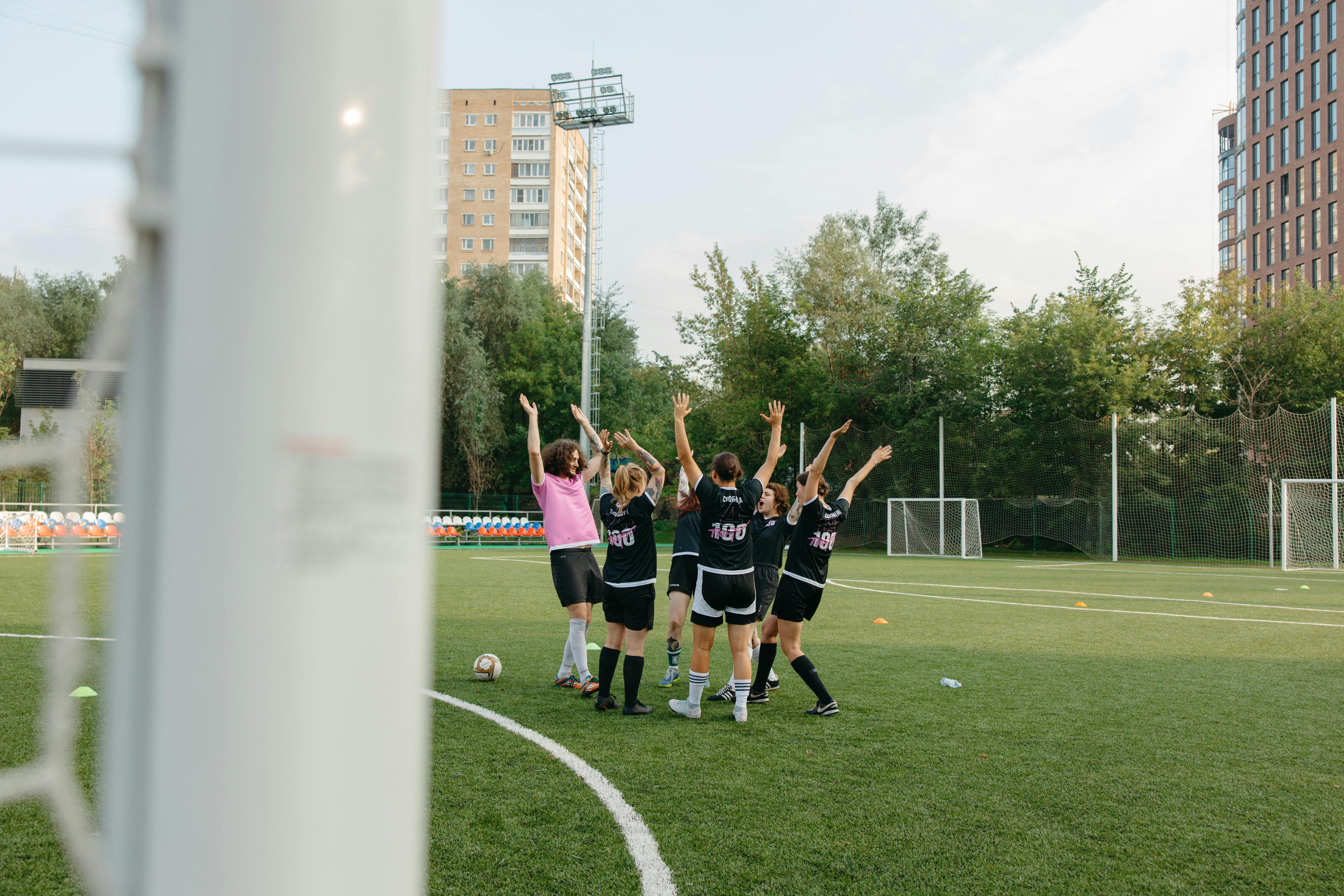
The celebration was the expression of that certainty, and much of its intensity came from the fact that once the referee had pointed, nothing could take it back.
Introducing a check means the celebration now begins before the outcome is actually known, which quietly changes what the celebration is: an assumption rather than a confirmation.
Players hedge without meaning to
Scorers glance at the officials, at the assistant's flag, and increasingly at the big screen before committing to a celebration.
That glance is a rational response to uncertainty, and it interrupts the reflex that produced the most memorable celebrations of previous decades.
Some players now deliberately celebrate fully regardless, treating it as a refusal to let the process dictate the moment.
Crowds have developed a second reaction
Supporters now produce two responses to one goal: an initial roar and a second, larger one when the decision is confirmed.
The second is often louder, because relief is added to joy, and because it releases tension built during the wait.
Where the check goes against them, the collapse from celebration to silence is abrupt, and it has become one of the defining sounds of the modern game.
The waiting period has its own choreography
Players stand in loose groups near the halfway line with their arms folded, watching a screen. Benches hold their position rather than surging forward as they once did.
Some squads have adopted deliberate poses for the wait, converting an awkward and passive pause into something intentional that the cameras can use.
Broadcasters cut between the screen, the officials and the crowd, so a period containing no football at all has become a scripted segment of the coverage.
What the game traded
The exchange was spontaneity for accuracy, and the accuracy is real: goals that should not have stood no longer do.
What was lost is harder to quantify, because it consisted of a shared reflex rather than an outcome anybody records.
The rules have since been adjusted to speed checks up and to announce decisions in the stadium, which is an acknowledgement that the delay itself was doing damage.