
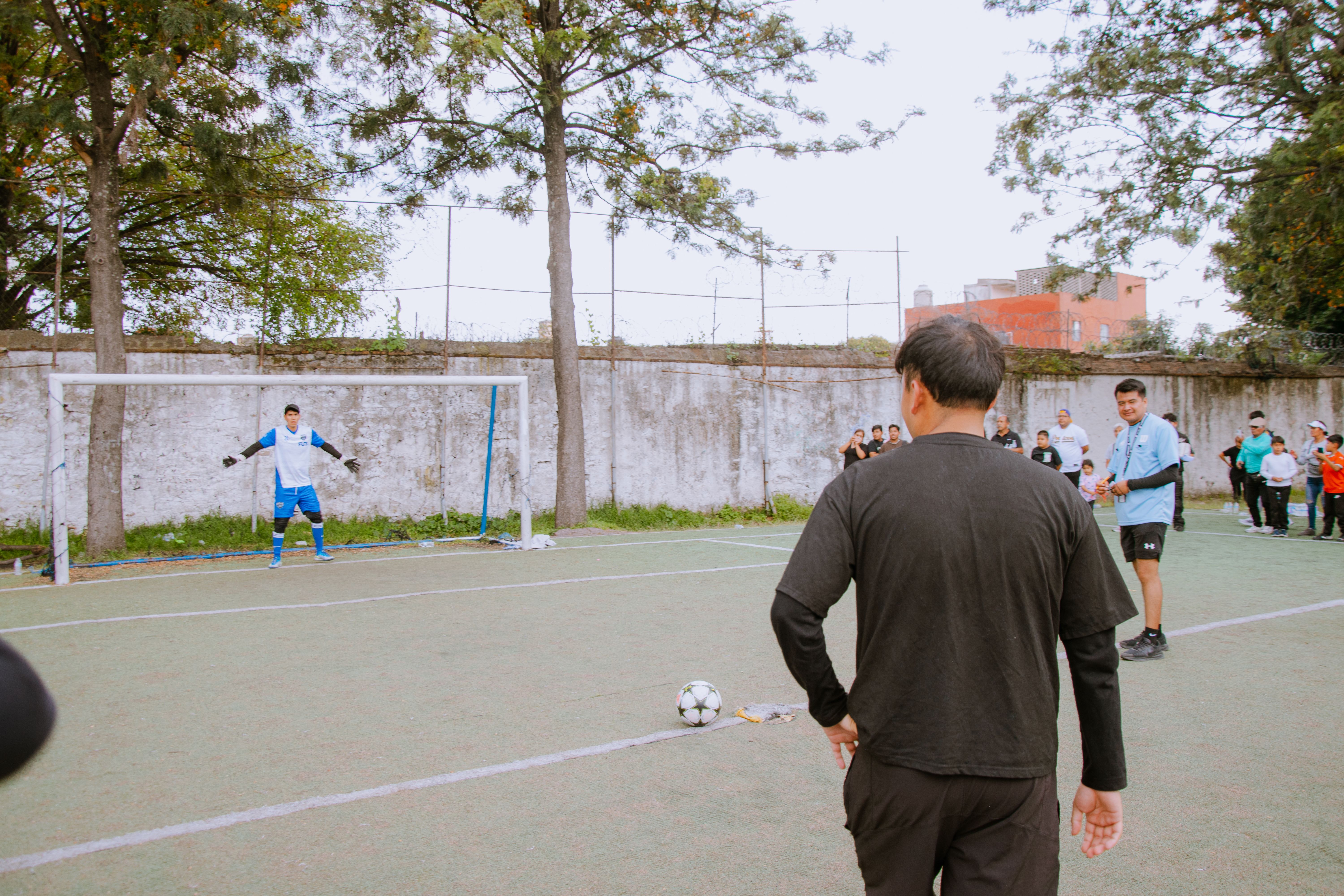
A penalty that is saved or hits the woodwork remains in play, but the rules surrounding what happens next are more restrictive than they appear. Those restrictions explain several strange decisions that follow.
The taker cannot touch it twice
Once the kick is taken, the taker may not play the ball again until another player has touched it, which includes his own rebound off the post.
Doing so is an offence, and the restart is an indirect free kick to the defending side rather than a goal.
A rebound off the goalkeeper is different, because the keeper has touched the ball, and the taker may then play it freely.
Encroachment decides whether it stands
All players other than the taker and the keeper must be outside the area, behind the ball, and at the required distance until the kick is struck.
An attacker who enters early and then scores from the rebound has the goal disallowed, with the kick retaken only in specific circumstances.
The equivalent defensive offence, entering early on a saved kick, results in a retake, which is why officials watch the line so carefully.
Timing the run is the real skill
Attackers are trying to arrive at the rebound first while starting from outside a marked area, so the run must begin at the moment of the strike.
Starting a fraction early risks the goal being ruled out, and starting late means a defender reaches the loose ball first.
Video review made the margin unforgiving, since a frame can now show a foot inside the arc before the ball has moved.
Why rebounds are worth contesting at all
A parried penalty is struck hard from twelve yards, so the save is rarely held, and the ball frequently returns into the six-yard area.
The goalkeeper is on the ground and the defenders are running from the edge of the box, so the first arriving attacker has a clear chance.
Teams that position two players wide on the arc rather than centrally get to the rebound more often, because they run onto the ball at an angle.
Shootouts remove the situation entirely
In a shootout each kick is complete once the ball stops moving, is saved or leaves play, and there is no rebound to contest.
That is why a taker who scores from his own rebound during a match cannot do the same in a shootout, and why nobody encroaches.
The difference confuses viewers regularly, and it is one of the few places where the same action produces opposite outcomes under the same laws.