
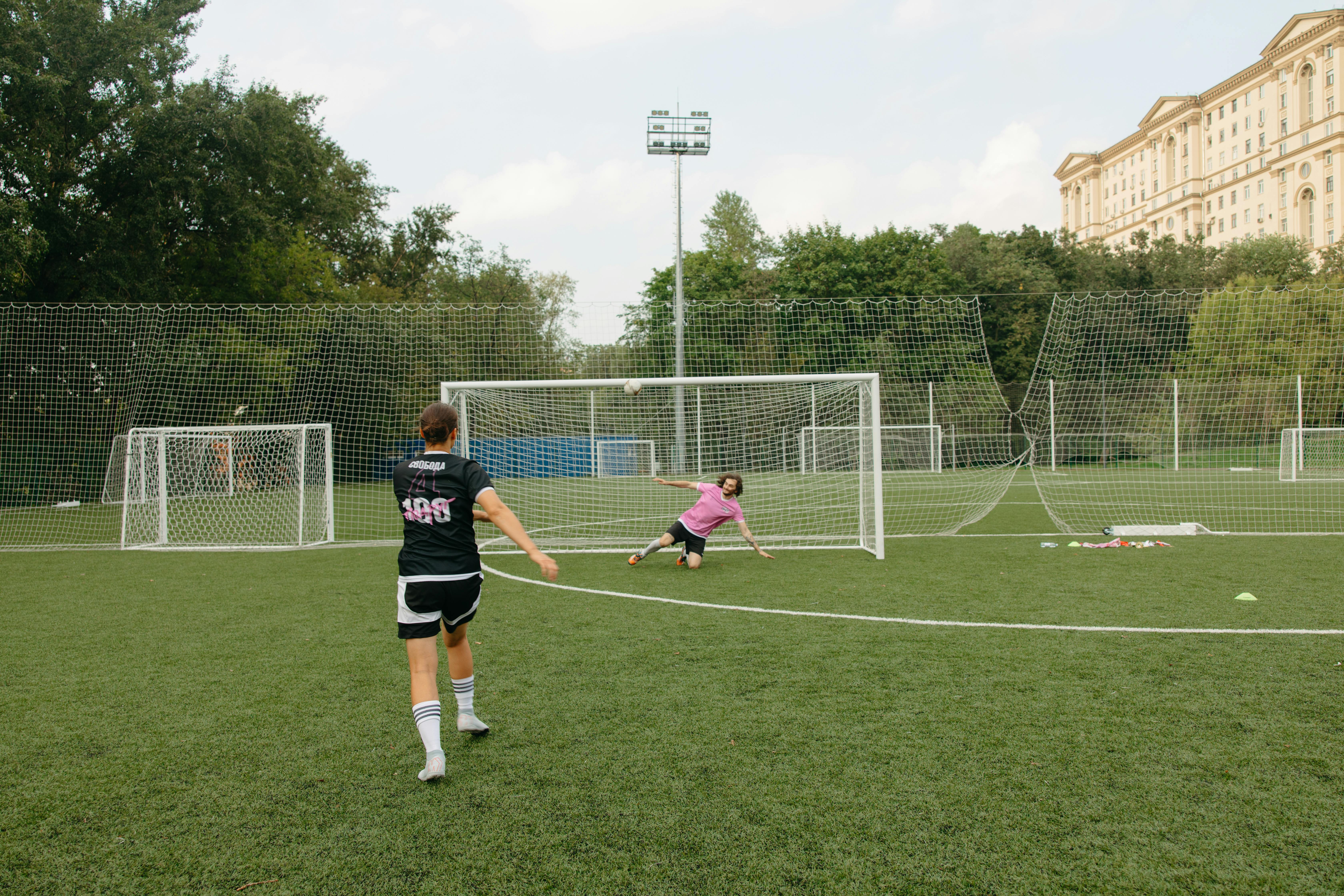
Teams that take the first penalty in a shootout are widely believed to hold an advantage. The mechanism is not about the penalty itself but about the position each subsequent taker walks up in.
The scoreboard alternates asymmetrically
In an alternating shootout, the team going second is behind for the majority of the sequence, because the first team scores before they get their turn.
A player walking to the spot while his team trails is taking a kick that must be scored, rather than one that would extend a lead.
The team going first faces that situation far less often, so the same physical task is performed under a different psychological load.
Elimination pressure lands on one side more
The kicks that end a shootout are almost always taken by the team going second, since they are the ones who can be eliminated by missing.
Knowing that a miss ends the match immediately is a different task from knowing a miss keeps the sequence alive.
Whatever effect that has on technique, it is applied disproportionately to one team by the structure of the format.
Why the coin toss carries weight
The order is decided by a coin toss, and captains who win it overwhelmingly elect to shoot first, which tells you what the players believe.
That belief is itself a factor, because a team that thinks it has an advantage takes the walk to the spot differently.
The toss also decides which goal the shootout is taken at, which is a separate and often larger consideration involving where each set of supporters is.
Alternatives have been proposed
Formats borrowed from other sports alternate in pairs, so each team takes two kicks in succession before the order flips.
The intention is to distribute the trailing position more evenly rather than concentrating it on one side throughout.
Trials of such systems have taken place in competitions willing to experiment, and none has yet displaced the conventional alternating order at the highest level.
What it does not explain
Shootouts remain close to even overall, so the advantage is a tilt rather than a decisive edge, and plenty of teams win from second.
Preparation, the identity of the takers and the goalkeeper's ability to read a run-up all matter more than the order does.
The order is simply the one factor decided by chance before anybody has kicked a ball, which is why it attracts attention out of proportion to its size.