
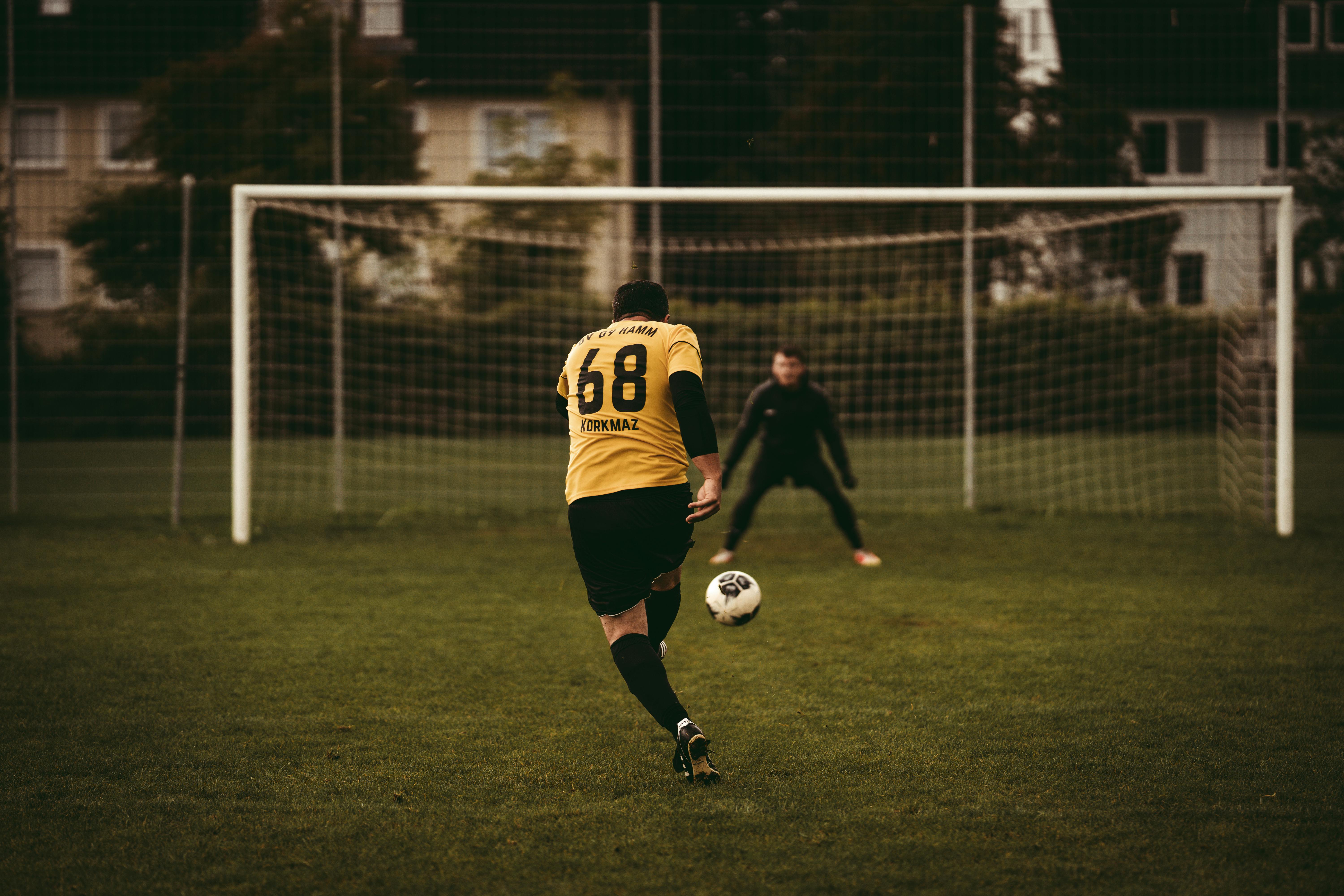
A penalty awarded after the designated taker has been substituted produces a brief scene of players looking at each other. Well-run teams have already settled who steps up, and the reasoning behind the order is not obvious.
The list exists before the match
Coaching staff establish a ranked sequence of takers, usually three or four deep, and communicate it before kick-off rather than during a stoppage.
The order accounts for who is likely to be substituted and who is likely to still be on the pitch late in a match.
Without a list, the decision falls to whoever is most confident in the moment, which is a poor way of choosing.
Technique matters less than temperament
Almost every professional can strike a penalty accurately in training, so the differentiator is behaviour under a stadium's attention.
Staff observe who shortens their run-up, who changes their mind on the walk and who alters technique when the stakes rise.
Those observations come from shootout practice and from previous matches, and they frequently promote players nobody would predict.
Seniority interferes with the plan
A captain or a senior forward may take the ball regardless of the list, and refusing him in front of a crowd is difficult for a younger teammate.
Coaches often address this explicitly, giving one player the authority to hand the ball over so the responsibility is not negotiated on the pitch.
The awkward exchanges that occasionally appear on television happen where that authority was never established.
Form is a weaker signal than it looks
A striker who has scored twice is not more likely to convert a penalty than a defender who has trained for it and taken them before.
Penalties are an isolated skill, disconnected from open play, and confidence within a match transfers less than most people assume.
Sticking to the pre-match order rather than reacting to the last ninety minutes is generally the sounder approach.
Shootouts change the calculation again
A shootout requires five takers plus reserves, so the depth of the list matters far more than the identity of the first name on it.
Coaches making late substitutions in extra time frequently do so with the shootout order in mind rather than with the remaining minutes.
Bringing on a specialist late is a legitimate tactic, and the players introduced that way have often practised nothing else all week.